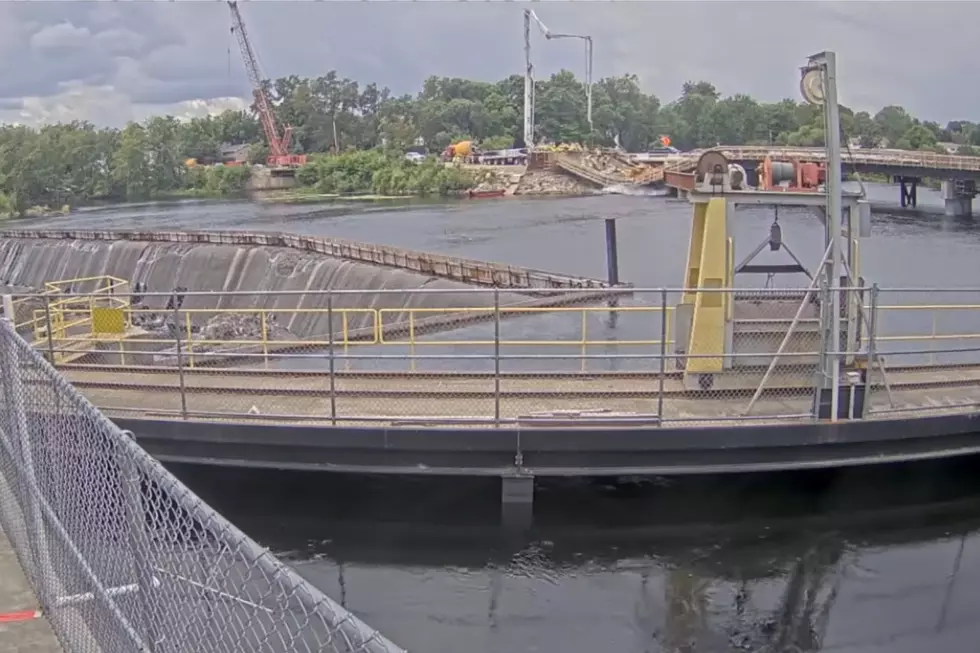
Watch This: Maine DOT Releases Video Of Exact Moment Llewellyn Estes Bridge In Old Town Collapsed Last Month
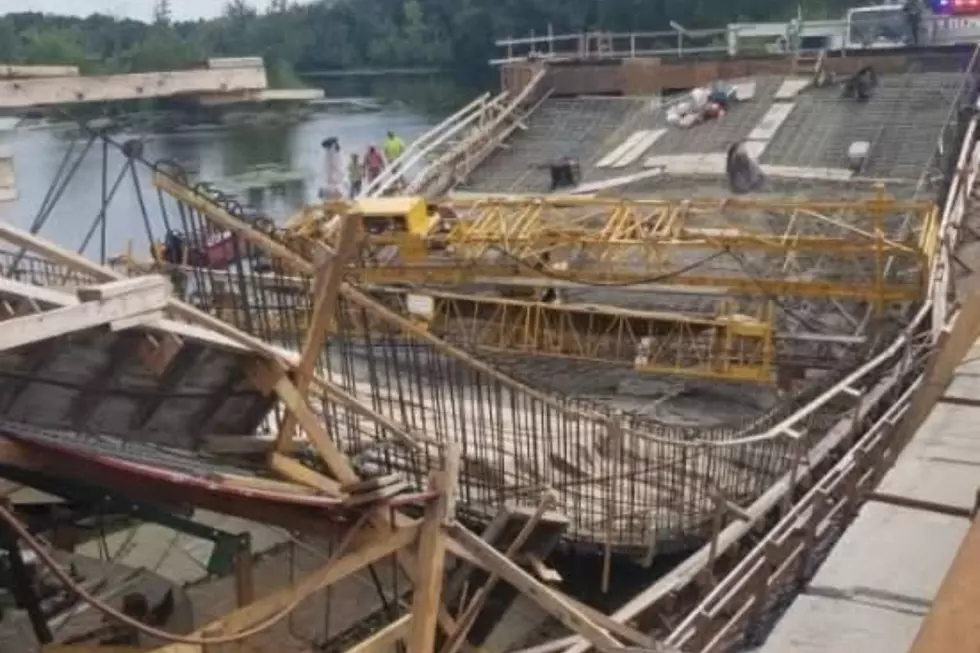
It's been almost one month since a bridge being replaced in the Penobscot County town of Old Town collapsed as work crews were pouring concrete for the bridge deck.
Read More: What Caused The Llewellyn Estes Bridge To Collapse In Old Town
Since the incident on August 13th, the Maine DOT has been on-site, collecting data and clues to piece together what may have led to the failure of the integrity of the Llewellyn Estes Bridge that runs along Stillwater Ave. They've been periodically updating the public as to what they have found.
This week, the agency put out a long list of answers to frequently asked questions about the project, which has shed some light as to what may have gone wrong.
They also released video footage that shows the exact moment when the bridge collapsed as workers tried to rush to safety. Thankfully, only one person suffered a broken ankle, and a couple more experienced minor injuries as a result of this collapse.
While investigators continue to collect information at the scene, and plan to eventually start the process of cleanup, officials with the Maine DOT say from what they can tell right now, the main culprit in the collapse seems to be with one of the girders that was developed by University of Maine Advanced Structures and Composites Center and designed and fabricated by Basalt International.

"Observations to-date indicate that the failure likely involved buckling of the outermost girder on the upstream side of the bridge span, followed by an immediate cascading failure of the adjacent girders. Determining the specific failure mode of the beams is part of the investigation and will require significant engineering analysis including finite element modeling and forensic testing to determine if the failure mode can be replicated with the observed and measured field conditions."
These girders were, in part, used to combat the issue of corrosion, which is a major factor in bridges breaking down over time, the Maine DOT says.

"Corrosion is a major contributor to deterioration of conventional bridge components and can increase maintenance costs and shorten bridge service life. Maine’s bridges operate in a particularly challenging environment because of exposure to winter deicing chemicals and, in coastal areas, saltwater. MaineDOT therefore evaluates and uses a variety of corrosion-resistant materials and technologies intended to improve bridge longevity...Fiber-reinforced polymer (referred to as FRP) composite tub girders are designed to resist corrosion while also offering advantages including lighter weight for transportation and erection."
The composite tub girder technology has been used in other bridge projects states like Florida and Rhode Island, and also in Maine, including the Twin Bridge that runs over the West Branch of the Souadabscook Stream and the Grist Mill Bridge in Hampden.
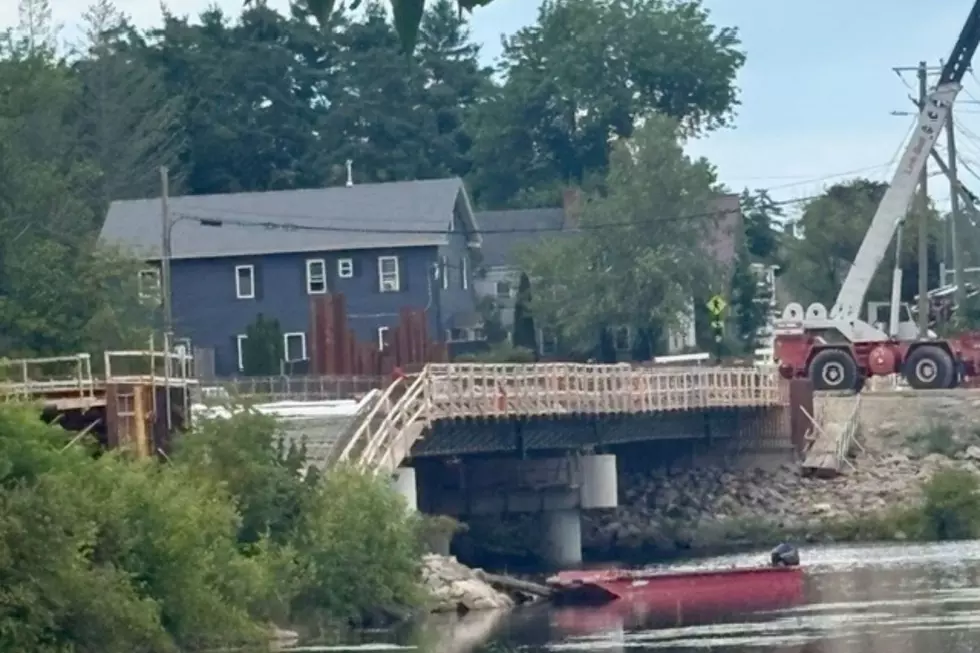
Since the collapse, the Maine DOT has inspected the temporary bridge that was constructed to carry traffic over the river as the Llewellyn Estes Bridge was being worked on. It has passed safety inspections, they say, and will continue to be used while the investigation and clean up take place.

The Federal Highway Administration's Turner-Fairbank Highway Research Center has been brought in to help with the investigation and to aid in organizing the debris removal.
Read More: Maine DOT Investigating Llewellyn Estes Bridge Failure
The Maine DOT says they do not yet know how much time the collapse will add to the overall completion of the project, nor do they know just how much money will be added to the final bill, when all is said and done.
They have said, however, that they will continue to look into the matter and provide updates on their findings.
For the latest information regarding the bridge collapse, you can check out the Maine DOT's website, here.
Beware of The Most Dangerous Roads in Maine
Gallery Credit: Lizzy Snyder
Maine’s 10 Most Beautiful, Walkable Downtowns
Gallery Credit: Arlen Jameson